
How to Understand the Alumawood Engineering Packet
Is your patio cover truly built to code? Learn what wind speed, span, overhang, live load, footing size, and metal thickness actually mean — and how to verify your contractor followed the engineering and obtained proper permits.
Scott Egbert, Owner, SAE Builders California Contractor License #625328
2/21/20263 min read

What This Packet Actually Is
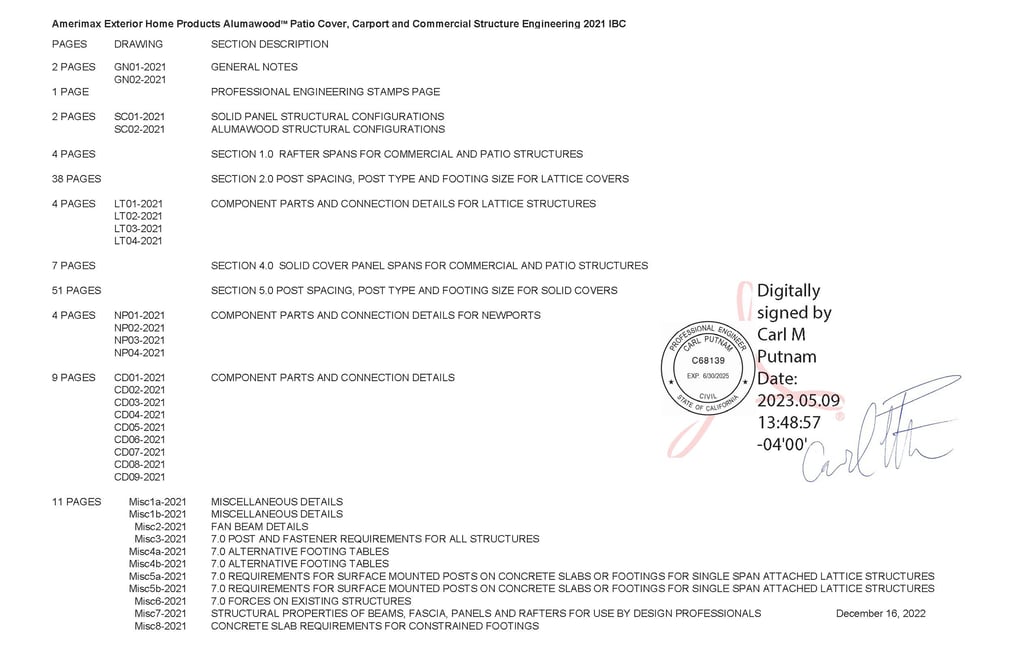
An engineering packet provides the structural design criteria, span tables, connection details, and other requirements used to design and review a patio cover.
It helps establish how the structure should be built to resist applicable loads and comply with the approved design.
It is engineering documentation, not marketing material.
The 10 Things That Matter
You do not need to understand the whole packet. You need to confirm these ten items:
1. Structure Type
Attached or freestanding
Lattice (open) or solid roof
All tables and sizing depend on this choice.
2. Wind Speed (Design Load)
The engineering packet will specify the design wind speed and wind exposure category used for the patio cover.
Wind-design requirements are not necessarily identical for every property in the same city. They can vary based on the project location, site exposure, structure configuration, governing code, and the engineering approved for that installation.
Wind design directly affects:
Post spacing
Beam size
Footing size
Attachment hardware
Reinforcement requirements
When reviewing the plans, confirm that the wind speed and exposure category shown on the engineering match the requirements for the specific project.
Incorrect wind design can result in an under-designed structure.
3. Width × Projection × Height
The packet is based on actual dimensions.
Width (left to right)
Projection (distance out from house)
Height (post height)
Changing any of these changes the structural requirements.
Taller posts reduce allowable span.
Longer projection increases rafter demand.
Wider structures increase tributary load.
If the installed dimensions exceed the limits shown in the approved engineering, the structure may no longer conform to the approved design.
4. Rafter Span
As span increases, the engineering may require changes such as:
A different rafter profile
Different material thickness
Reduced rafter spacing
Additional reinforcement
Reduced allowable projection
The engineering tables define the allowable span for the specific member, spacing, and design loads.
The installed rafter span should remain within the limits shown in the approved engineering.
5. Overhang Limits
Overhang is the portion of the patio cover that extends beyond the supporting beam.
The approved engineering limits overhang because increasing that distance changes the forces acting on the beam, posts, and connections.
Excessive overhang can increase:
Uplift forces
Beam rotation
Connection stress
Deflection
Loads transferred to the supporting structure
The allowable overhang depends on the specific member size, span, attachment method, and design loads shown in the engineering.
Overhang should match the limits in the approved engineering. It is a structural design condition, not simply a cosmetic choice.
6. Live Load
Live load is the temporary load a patio cover may be required to support during normal use and environmental conditions.
Depending on the project and location, this can include:
Maintenance or service loads
Rain-related loading
Snow load where applicable
The required live load should be taken from the approved engineering and permit documents for the specific project, rather than relying on a general rule-of-thumb value.
When reviewing the engineering packet, confirm that the specified live-load requirements match the design criteria required for that installation.
If the installed structure does not comply with the live-load requirements shown in the approved engineering, the installation may not meet the approved design.
7. Post Spacing
The engineering tables specify the maximum allowable post spacing for the applicable beam, span, and design loads.
If posts are spaced farther apart than allowed:
Beam stress increases
Deflection increases
Long-term performance decreases
Wider spacing is often done to “make it look cleaner,” but it must match engineering.
8. Footing Size
Footings resist:
Gravity
Wind uplift
Lateral movement
The packet defines:
Diameter
Depth
Uplift vs constrained footing type
Footings that do not match the engineering can compromise the structure’s resistance to gravity, uplift, and lateral loads.
9. Metal Thickness and Structural Member Requirements
This is an important part of the engineering and is often misunderstood.
Structural aluminum members are designed around specific member profiles, material properties, and wall thicknesses. The engineering tables and allowable spans are based on those exact specifications.
A thicker member is not automatically “better” in every situation, and a thinner member is not automatically inadequate. What matters is whether the installed component matches the member required by the approved engineering.
When reviewing the plans, confirm that the installed:
Beam profile
Rafter profile
Post or structural member
Material specification
Wall thickness
match the engineering for the required span and design loads.
Substituting a different member or thickness can change:
Allowable span
Deflection
Load capacity
Wind performance
Reinforcement requirements
The installed structural members should match the specifications used in the approved engineering tables. Material thickness is a structural requirement, not a cosmetic detail.
10. Proper Detail Sheets
A patio-cover engineering or permit package will typically include the structural information needed to identify how the project is to be built.
Depending on the project and jurisdiction, this may include:
Configuration or layout information
Applicable span tables
Beam and post requirements
Footing details
Connection and attachment details
Project-specific design criteria
The exact documents required can vary by project and permitting authority.
The important point is that the plans and engineering used for construction should clearly identify the structural requirements that apply to that specific installation.
The Simple Structural Flow
Identify the structure type
Confirm design loads and exposure requirements
Confirm dimensions (width × projection × height)
Determine allowable rafter span
Determine beam size and post spacing
Confirm footing requirements
Confirm structural member profiles, materials, and thicknesses
Confirm connection and attachment details
Everything in the engineering packet supports those decisions.
Engineering packets look complex because they are written for plan reviewers. But they answer one question:
Can this structure safely resist the required loads and be built in accordance with the approved engineering for this specific project?
That is the practical purpose of the engineering packet.
Planning a project?
See our Alumawood patio covers in Menifee page for design, permitting, and installation details.